
Shawarma Calories: Log a Serving Simply
Published: · 4 min read
Shawarma is one of the hardest dishes to log: every stand makes it differently, and the toppings change from bite to bite. The simple answer is that you don't need a perfect number. You need an approximate, consistent entry that shows you what your week looks like. Here is how to do it.
Start from what you ate, not from what went into it
Instead of breaking the shawarma down into meat, oil and salad, describe it the way you would tell a friend: “Shawarma in a lafa with hummus, tahini and salad, and fries on the side.”
For example: shawarma in a pita after work, with fries. One sentence like that already contains everything that matters. What to do today: the next time you eat out, write down the dish in one sentence right after the meal, before you forget the details.
Size matters, and you don't need a scale
A large lafa and a small pita are not the same meal, and a plated serving is different from both. There is no need to weigh anything. It is enough to note the format: pita, lafa or plate, and whether you shared it with someone.
For example: half a serving with a friend at the market. Write “half a shawarma plate” and the entry is accurate enough. What to do today: decide on three fixed words for size (small, regular, large) and always use them.
The toppings are half the story
Tahini, amba, hummus, fries and salad change the picture. You don't have to mention every one, but it is worth noting the prominent ones, especially if you add them generously.
For example: if you added fries, log them as a separate item. If you ate only salad and shawarma, log only that. What to do today: get used to logging the biggest topping rather than the whole list.
Not precise? That's fine
A food diary is a mirror, not an exam. A meal you logged as an estimate is worth more than a meal you skipped. If you logged shawarma twice this week, that is already a real picture of your habits, without judgment.
Common mistakes when logging shawarma
The first mistake is skipping the entry because “it's hard to know what's inside.” The second mistake is logging only the lafa and forgetting the fries and the sweetened drink that came with it. The third mistake is logging in the evening, from memory, a meal you ate at noon.
For example: a lunch at work, shawarma and a soft drink. If you log only the shawarma, the picture is incomplete. What to do today: after every meal out, ask yourself “what else was on the table?” and log that too. You can check later whether this description helps you understand the meal, and change it if it isn't clear. And if you missed one, you simply carry on: a good diary is measured in weeks, not in a single meal.
What this looks like in Healthy+
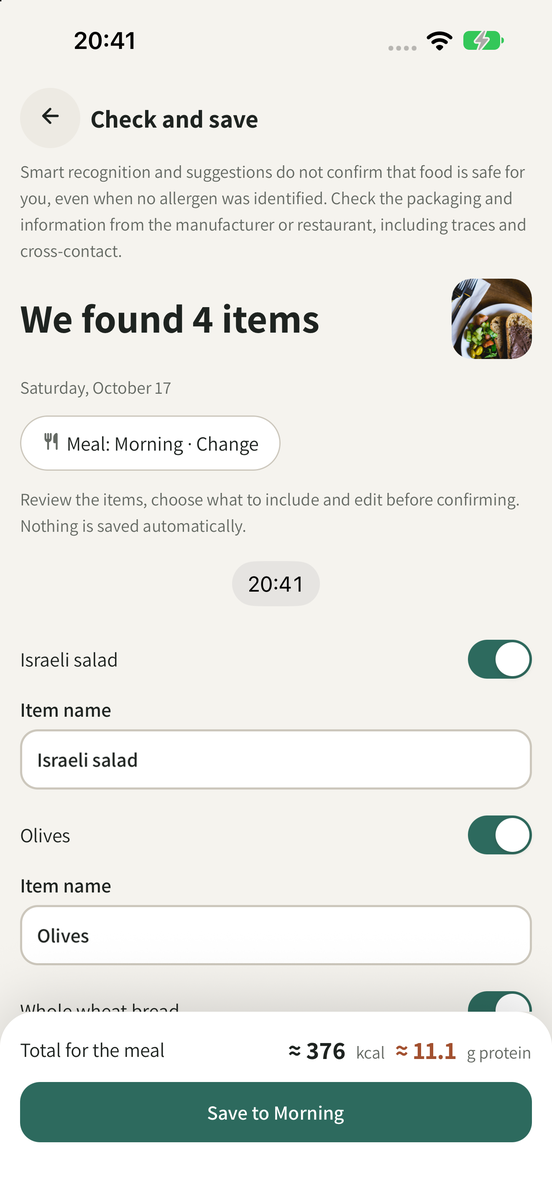
In Healthy+ you can write or say in Hebrew a single sentence such as “shawarma in a lafa with hummus and tahini,” take a photo of your plate, or pick a dish from a database of dishes from Israeli restaurants. The entry is saved in your personal diary. Details about smart processing and backup appear in the Privacy Policy.
Frequently Asked Questions (FAQ)
Can I log shawarma without knowing what's in it?
Yes. A description in your own words is enough to track your habits, and you can correct it afterward.
Which is better: taking a photo or writing?
It depends on you. Writing is quick when you're on the go, and a photo works when you have a moment and want to see the plate.
Does the app tell me what to eat?
No. It is a diary that helps you see what you ate, and it is not a substitute for medical or nutritional advice.
If you feel like logging your next shawarma in a few seconds, Healthy+ is waiting for you.